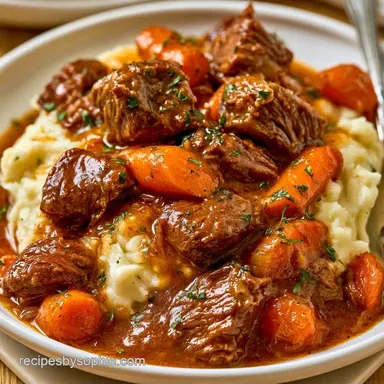
Savory Irish Beef Stew with Mashed Potatoes
- Time: 15 min active + 210 min simmering
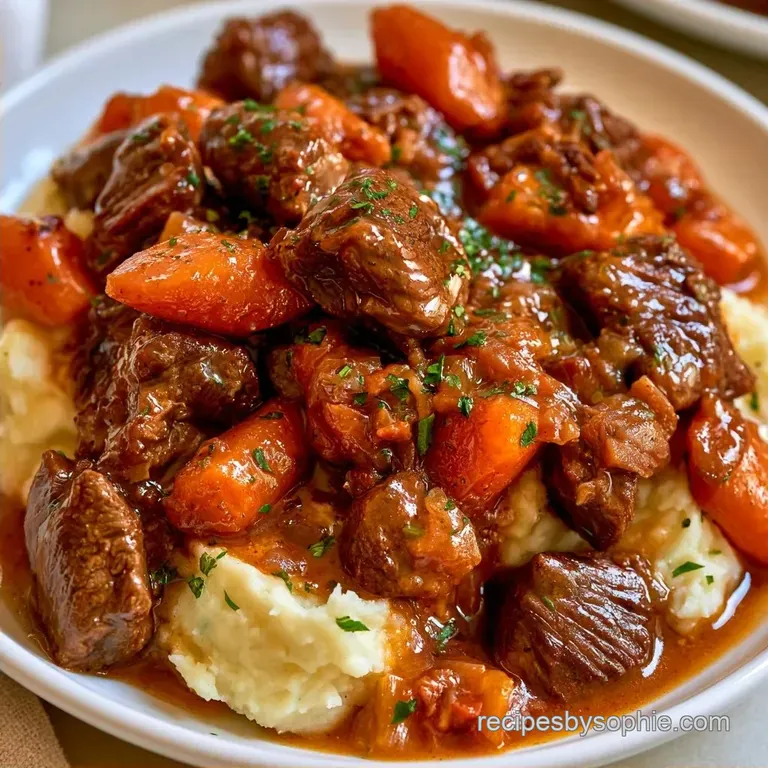
- Flavor/Texture Hook: Savory, mahogany colored gravy over buttery, smooth mash
- Perfect for: Cold Sunday dinners or comforting meal prep
The smell of beef hitting a hot pot of butter and oil is a total trigger for me. It reminds me of those rainy October weekends where the only goal is to keep the house warm and the stove humming. There's something about that specific sizzle that tells you a cozy meal is actually happening.
I used to think any beef would work, but I learned the hard way that lean cuts just turn into rubber. This version focuses on the slow breakdown of beef chuck, which gives you those tender chunks that barely need a fork.
We're pairing the stew with a side of creamy, buttery mash to soak up every drop of the sauce. This Irish Beef Stew with Mashed Potatoes isn't about fancy techniques, just patience and a few key steps to get the flavor right.
Irish Beef Stew with Mashed Potatoes
The Brown Bits: Searing the meat creates a crust called fond that thickens the sauce and adds deep, savory notes. Tough Cuts: Low heat turns the collagen in beef chuck into gelatin, which makes the meat tender and the gravy velvety.
The Gear You'll Need
You'll want a heavy bottomed pot, like a Dutch oven, because it holds heat evenly and won't burn your stew during the long simmer. If you don't have one, a deep stockpot works, but you'll need to be more mindful of the heat.
For the potatoes, a hand masher is great, but a ricer produces that professional, lump free texture. A sturdy whisk for the cream mixture and a set of tongs for searing the beef will make the process much smoother.
The Shopping List
Right then, let's look at what you need. I've listed everything below, along with why it's there. Trust me on the Yukon Gold potatoes, they have a natural buttery flavor that Russets just can't match.
| Ingredient | Role | If You Don't Have It |
|---|---|---|
| Beef Chuck | Main protein and collagen source | Stew meat (pre cut) |
| Yukon Gold Potatoes | Base for creamy mash | Russet potatoes (will be grainier) |
| Beef Broth | Liquid base for the gravy | Brown stock or water with bouillon |
| Unsalted Butter | Adds richness and flavor | Ghee or margarine |
I usually grab the low sodium broth so I can control the salt levels myself. There's nothing worse than a stew that tastes like a salt lick because the broth was too aggressive.
| Original Ingredient | Substitute | Why It Works |
|---|---|---|
| Heavy Cream | Full fat Coconut Milk | Similar fat content. Note: Adds a slight tropical coconut taste |
| Sour Cream | Greek Yogurt | Similar tang and thickness. Note: Slightly more acidic |
| Worcestershire Sauce | Soy Sauce | Provides a salty, umami punch. Note: Lacks the vinegary tang |
The Timing and Yield
This recipe is designed for a crowd or for those who love leftovers. It takes a bit of time on the stove, but most of that is hands off.
- Prep time:15 minutes
- Cook time:210 minutes
- Total time:225 minutes
- Yield: 6 servings
From Prep to Plate
Phase 1: Searing for Maximum Flavor
- Pat the beef cubes dry with paper towels. Note: Wet meat steams instead of browning. Season them generously with salt and pepper.
- Heat olive oil and 1 tbsp of butter in your pot over medium high heat. Sear beef in batches until deeply browned on all sides, then move them to a plate.
- Add the remaining butter for the stew to the pot. Sauté diced onions and carrots for 5–7 minutes until the onions look translucent and smell sweet. Stir in minced garlic for 1 minute.
- Stir in the flour and cook for 2 minutes. Note: This removes the raw flour taste and helps thicken the gravy.
Phase 2: The Slow Simmer
- Slowly pour in the beef broth and Worcestershire sauce. Note: Scrape the bottom of the pot with a wooden spoon to release all the brown bits.
- Return the seared beef to the pot. Add thyme and bay leaves. Simmer gently on low heat for 3 hours until the beef is tender and breaks apart easily.
- Stir in the frozen peas during the last 5-10 minutes of cooking until they are bright green and heated through.
Phase 3: The Creamy Mash
- While the stew finishes, boil cubed Yukon Gold potatoes in salted water until a fork slides in without resistance.
- Drain the potatoes and mash them using a masher or ricer.
- Warm the butter, heavy cream, and sour cream together in a small pan, then fold them into the potatoes until the texture is silky and fluffy.
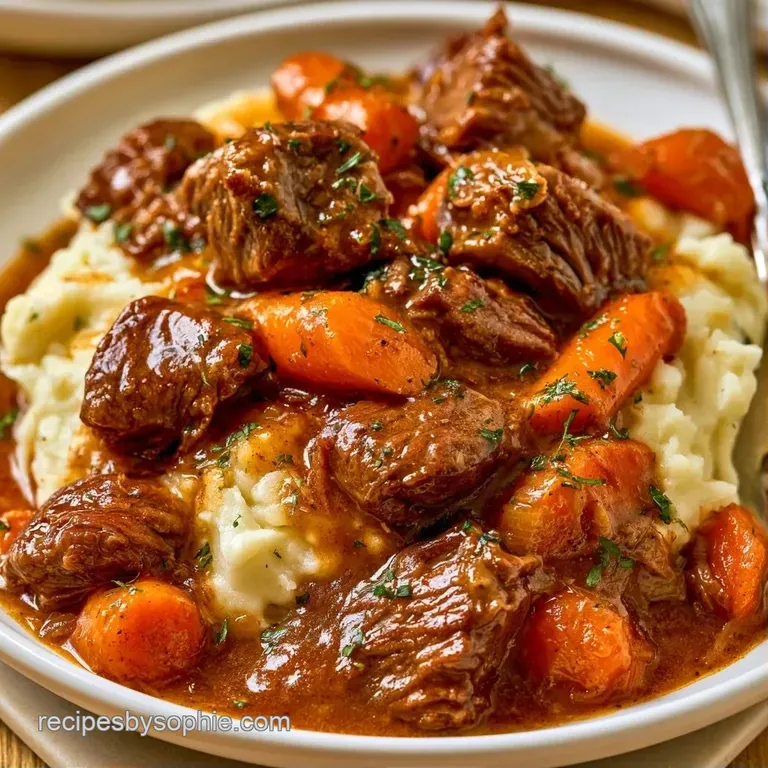
- Spoon the Irish Beef Stew with Mashed Potatoes over a bed of mash and serve immediately.
Chef's Tip: To get an even deeper color on the beef, don't crowd the pan. If you put too much meat in at once, the temperature drops and you get gray meat instead of a brown crust.
Handling Common Stew Issues
Sometimes things go sideways in the pot. It's usually something simple like heat management or a bit of timing. If your gravy feels a bit off, don't panic. Just a few small tweaks can bring it back.
Stew is Too Watery
If the sauce is too thin, it usually means the flour didn't cook long enough or the broth didn't reduce. You can fix this by simmering it uncovered for the last 30 minutes or adding a cornstarch slurry. For a more traditional approach, check out my Stovetop beef stew recipe for tips on reduction.
Beef is Tough
Tough meat usually happens if the heat was too high, which "seizes" the proteins. If the meat is still chewy after 3 hours, give it another 30-60 minutes on low.
USDA guidance puts the safe internal temperature for beef at 145°F, but for stew, we want it much higher so the connective tissue actually melts.
Potatoes are Lumpy
Lumps happen when you over work the potatoes or use a fork instead of a masher. If they're too lumpy, you can push the mash through a fine mesh sieve for a smoother result.
| Problem | Fix |
|---|---|
| Watery Gravy | Simmer uncovered for 30 mins or add 1 tsp cornstarch slurry |
| Tough Beef | Simmer on low for another 45-60 minutes |
| Lumpy Mash | Pass through a sieve or use a ricer |
Storing and Reheating Tips
The flavors deepen overnight, making this meal even more delicious on day two. Keep the stew and mashed potatoes in individual containers in the refrigerator for a maximum of 4 days.
The stew freezes well and stays good for 3 months. Avoid freezing the mashed potatoes, as they may become grainy after thawing. It's better to whip up a new batch of potatoes when you warm up the meat.
To reheat, warm the stew in a pot on low heat, adding a bit of beef broth to thin the gravy. While a microwave is fine for the potatoes, reheating them in a pan with some extra butter preserves their creamy texture.
Twists on the Classic
If you want to change things up, there are a few ways to tweak this Irish Beef Stew with Mashed Potatoes. Some people love adding a bit of Guinness for a more authentic pub style flavor. Just replace 1 cup of beef broth with 1 cup of stout.
For a different cooking method, you can use a Dutch oven beef stew approach by transferring the pot to the oven at 325°F (160°C) for the simmer phase. This provides a very steady heat that's often more consistent than a stovetop.
Decision Shortcut:
- For a smokier flavor: Use smoked paprika instead of thyme.
- For a thicker gravy: Add an extra tablespoon of flour during the sauté step.
- For a lighter version: Swap the sour cream in the mash for plain Greek yogurt.
I've also tried adding parsnips along with the carrots. It adds a subtle sweetness that balances the richness of the beef and butter.
| Method | Texture | Time Investment |
|---|---|---|
| Stovetop | Thick & Rich | Medium (active monitoring) |
| Oven | Consistent & Tender | Low (set and forget) |
| Slow Cooker | Very Soft | Very Low (8 hours) |
Serving and Enjoying the Dish
The best way to serve this is in wide, shallow bowls. Start with a generous scoop of the mashed potatoes and create a small well in the center with your spoon. Ladle the Irish Beef Stew with Mashed Potatoes right into that well so the gravy flows down the sides of the potatoes.
Pair this with some crusty sourdough bread or a simple side of steamed cabbage to cut through the richness. A cold glass of ale or a crisp apple cider works perfectly here.
Since this meal is so heavy, I usually serve it with a side of pickled onions or a sharp vinegar based slaw. That hit of acidity cleanses the palate between bites of the rich beef and buttery mash.
Recipe FAQs
Is it true that Irish stew is identical to American beef stew?
Actually, no. Traditional Irish stew often uses mutton or lamb, while this version focuses on rich beef chuck.
Tip: Sear the meat in batches to ensure a deep brown crust without steaming.
How can I achieve a thicker stew consistency?
Stir in flour after sautéing the vegetables and cook for two minutes to remove the raw taste.
Tip: Slowly pour in the beef broth while scraping the bottom of the pot to incorporate the fond.
What is the secret to a deeper flavor?
Sear the beef cubes until deeply browned to create a flavorful base on the pot bottom.
Tip: Use a combination of olive oil and butter for a higher smoke point and better taste.
Which sides pair best with this dish?
Spoon the stew over a bed of fluffy mashed potatoes for a classic presentation.
Tip: For another hearty beef dinner, try our stuffed peppers.
Does adding the peas at the start work?
Surprisingly, no. Adding frozen peas too early results in a mushy texture and faded color.
Tip: Stir them in during the last 5 to 10 minutes of cooking.
How should the meat be prepared before cooking?
Use paper towels to blot the beef cubes dry, then season them well with salt and pepper.
Tip: Let the beef reach room temperature before searing to ensure it cooks evenly.
Can this stew be made without potatoes in the pot?
Yes, this recipe specifically prepares the potatoes as a separate mash to avoid a starchy broth.
Tip: Fold in sour cream and heavy cream to the mash for a richer texture.
Irish Beef Stew Mash