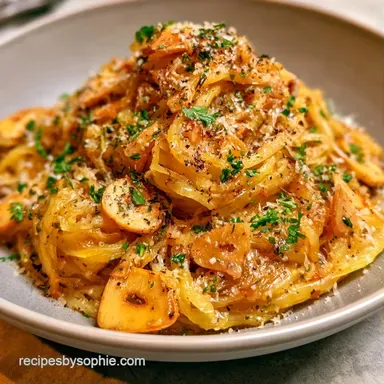
Roasted Spaghetti Squash Aglio Olio

- Time: 10 min active + 40 min cooking
- Flavor & Texture: Garlicy, savory, and tender
- Perfect for: Healthy weeknight dinner
People often think spaghetti squash is a watery, mushy mess that tastes like steamed veg. It isn't. The problem is usually how it's finished.
If you roast it and serve it immediately, it's too wet. The trick is tossing those strands in a hot pan with olive oil to evaporate the excess liquid.
This spaghetti squash aglio olio uses that technique to get a texture closer to real pasta. It's simple, budget-friendly, and hits the spot when you want comfort without the heavy grains.
Easy Spaghetti Squash Aglio Olio
- Pan Sauté: This step boils off the remaining water from the squash, so the oil actually sticks to the strands.
- Cold Start Garlic: Starting garlic in cold oil lets the flavor infuse slowly, which makes the pieces less likely to burn.
Since you can prepare this a few ways, here is how the roast method compares to a faster version.
| Method | Time | Texture | Best For |
|---|---|---|---|
| Roasted | 40 min | Tender and structured | Meal Prep |
| Microwave | 15 min | Softer and wetter | Quick Lunch |
Recipe Specs
This dish relies on a few high-impact ingredients. You don't need expensive tools, just a standard baking sheet and a skillet. It's a great way to get those Italian flavors on a budget.
The Ingredient Breakdown
| Ingredient | Role | If You Don't Have It |
|---|---|---|
| Garlic | Flavor base | Garlic powder (use 3/4 tsp) |
| Parmesan | Saltiness and body | Pecorino or nutritional yeast |
| Olive Oil | Fat and carrier | Avocado oil |
Pantry List
- 1 medium spaghetti squash (approx. 3 lbs / 1.3kg)
- 2 tbsp olive oil Why this? High heat stability for roasting
- 1/2 tsp salt
- 1/4 tsp black pepper
- 1/3 cup extra virgin olive oil Why this? Best flavor for the sauce
- 6 cloves garlic, thinly sliced
- 1 tsp red pepper flakes
- 1/4 cup fresh Italian parsley, chopped
- 1/2 cup grated Parmesan cheese
- 1 tbsp fresh lemon juice
Tools You'll Need
You'll need a sharp knife for the squash and a fork for scraping. A wide skillet works best for the sauté step because it gives the moisture more room to evaporate quickly.
Cooking Process
Perfecting the Roast
- Adjust the oven temperature to 400°F (200°C).
- Cut the spaghetti squash in half lengthwise and clear out the seeds.

- Coat the inside of each squash half with 2 tbsp olive oil, 1/2 tsp salt, and 1/4 tsp black pepper.
- Arrange the squash face down on a baking tray and roast for 30–35 minutes until a knife slides easily into the flesh.
- Take it out of the oven and use a fork to scrape the inside into long, thin strands.
Building the Flavor Base
- Combine 1/3 cup extra virgin olive oil and 6 sliced garlic cloves in a cold skillet over medium-low heat.
- Cook the garlic for 3–5 minutes until golden and fragrant.

- Mix in 1 tsp red pepper flakes and toast for 30 seconds.
Bringing it All Together
- Turn the heat up to medium-high and stir the squash strands into the skillet.
- Sauté for 3–5 minutes, stirring often until excess moisture evaporates and strands are coated.

- Take the pan off the heat and fold in 1/4 cup chopped parsley and 1 tbsp fresh lemon juice.
- Stir in 1/2 cup grated Parmesan cheese until just melted.
Problems and Solutions
Bitter Garlic Taste
If the garlic turns dark brown or black, it oxidizes and tastes bitter. To avoid this, always start with cold oil and keep the heat low. If it burns, it's better to wipe the pan and start over.
Watery Squash Strands
Some squash just hold more water than others. If the pan looks like a soup, keep sautéing on medium-high for another 2-3 minutes. You want to see the oil glistening on the strands, not pooling at the bottom.
Bland Final Flavor
The squash absorbs a lot of salt. If it tastes flat, add an extra squeeze of lemon or a pinch more salt right before serving.
| Problem | Fix |
|---|---|
| Bitter Garlic | Start garlic in cold oil |
| Watery Texture | Sauté longer on high heat |
| Bland Taste | Add more lemon or salt |
Ways to Customize
You can easily swap the cheese for nutritional yeast if you want a vegan version. For more bulk, I like adding shrimp or grilled chicken to the pan right after the garlic is golden.
If you want a version with more greens, check out this Roasted Spaghetti Squash Vegetables recipe. You could also add a handful of capers at the end for a salty, briny kick to this spaghetti squash aglio olio.
Storage Guidelines
Store leftovers in an airtight container in the refrigerator for 3 to 5 days.
When reheating, skip the microwave to prevent the squash from getting mushy. Instead, warm it in a pan using medium heat and a drop of olive oil to restore that glossy finish. When reheating cooked leftovers, check with a food thermometer that the centre reaches 165°F (74°C); the appliance temperature and time alone do not confirm this.
This dish isn't suitable for the freezer. The squash's high water content causes it to break down, resulting in a grainy texture once thawed.
Serving Suggestions

Serve this in a shallow bowl and top with extra red pepper flakes for more heat. It goes great with a crisp arugula salad dressed in balsamic vinegar to provide a sharp acidic contrast. If you have some toasted walnuts, toss those on top for a bit of crunch.
Common Questions
Is spaghetti squash good for diabetics?
Yes, it is a great choice. It has a lower glycemic index and fewer carbohydrates than traditional wheat pasta.
Can you use spaghetti squash as spaghetti?
Yes, it works well as a low-carb alternative. Similar to our veggie squash boats, the flesh naturally separates into strands that mimic noodles.
Does this squash help with dieting?
Yes, it is very nutrient-dense. It provides a high volume of food with fewer calories compared to grain-based pasta.
How to make squash spaghetti?
Roast the squash at 400°F for 30–35 minutes. Once tender, shred the flesh into long strands with a fork.
What makes the squash more spaghetti-like?
Sautéing the strands in a skillet for 3–5 minutes. This evaporates excess moisture and helps the strands hold their shape.
Which method ensures soft spaghetti squash?
Roasting until a knife slides easily into the flesh. Rubbing the interior with olive oil also keeps the strands tender.
Roasted Spaghetti Squash Aglio Olio