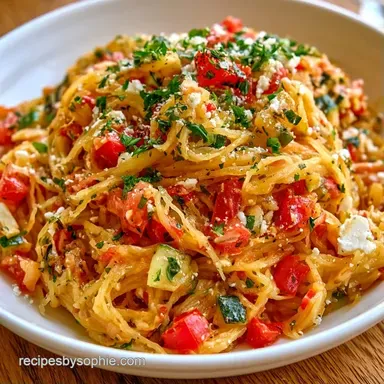
Roasted Spaghetti Squash with Vegetables

- Time: 20 min active + 65 min cooking
- Flavor & Texture: Savory and salty with al dente strands
- Perfect for: A healthy weeknight dinner or meal prep
Spaghetti Squash Vegetables: The Non-Watery Way
Most people settle for watery, bland squash that tastes like wet cardboard. It usually happens because they roast it cut side up, allowing the moisture to evaporate too quickly or pool in the center, leaving the strands limp and flavorless.
This method fixes that. By roasting the squash face down, the flesh steams in its own juices while the edges caramelize against the pan. Your spaghetti squash vegetables won't taste like steamed water, but like a rich, savory pasta alternative.
The result is a vibrant mix of Mediterranean flavors. You get a nice char on the peppers and zucchini, a pop of acidity from the lemon, and a salty hit of feta that ties everything together.
Recipe Specs
This dish is designed for minimal cleanup. You only need one baking sheet and one large skillet. It's a great way to get a huge volume of vegetables on the plate without feeling heavy.
| Method | Time | Texture | Best For |
|---|---|---|---|
| Oven Roast | 65 min | Al dente | Deep flavor and structure |
| Microwave | 15 min | Soft/Mushy | Absolute speed |
Since we're using the oven, we get a better concentration of sugars in the squash. It takes longer, but the texture is completely different.
The Ingredient List
| Ingredient | Purpose | Alternative |
|---|---|---|
| Spaghetti Squash | Serves as the "pasta" foundation | Butternut squash (chunkier consistency) |
| Feta Cheese | Provides salty, tangy richness | Goat cheese (creamier, less salty) |
| Lemon Juice | Brightens the overall flavor | Apple cider vinegar (milder acidity) |
| Kalamata Olives | Adds a savory, briny kick | Caper berries (more intense saltiness) |
- 1 (3-4 lb) spaghetti squash
- 3 tbsp olive oil Note: Great for sautéing as it handles heat well
- 1 tsp salt
- 1/2 tsp black pepper
- 1 medium (150 g) yellow onion, diced
- 2 cloves (6 g) garlic, minced
- 1 red bell pepper (150 g), diced
- 1 medium (200 g) zucchini, diced
- 1 cup (150 g) cherry tomatoes, halved
- 1/2 cup (60 g) kalamata olives, pitted and sliced
- 1/2 cup (60 g) crumbled feta cheese
- 2 tbsp (8 g) fresh parsley, chopped
- 1 tbsp (15 ml) fresh lemon juice
Tools You'll Need
This is easily achievable in any home kitchen. A standard rimmed baking sheet is necessary to stop squash juices from dripping into the oven. For the vegetables, a 12-inch skillet made of stainless steel or cast iron is best for browning the onions due to its excellent heat retention.
To form the strands, a sturdy fork is all you'll need.
Cooking step by step
Phase 1: Roasting for Concentrated Flavor
- Set your oven to 400°F (200°C).
- Cut the spaghetti squash into two halves lengthwise and remove the seeds.
- Coat the inside of each half with 1 tbsp olive oil, then sprinkle with 1 tsp salt and 1/2 tsp black pepper.
- Set the squash face down on a baking sheet and roast for 40–50 minutes until the flesh is tender and the skin is easy to pierce with a fork. Note: Roasting it this way keeps the strands from drying out.
Phase 2: Creating a Caramelized Base
- While the squash roasts, warm 2 tbsp of olive oil in a big pan over medium-high heat.
- Toss in the diced yellow onion and red bell pepper. Sauté for 5–7 minutes until the edges turn golden brown.
- Stir in the zucchini and cook for 4 minutes until tender crisp.
- Add the cherry tomatoes and minced garlic. Cook for 2–3 minutes until the tomatoes soften and release their juices.
- Mix in the sliced kalamata olives and take the skillet off the heat.
Phase 3: The Final Toss
- Use a fork to scrape the roasted squash into long strands right in the shell.
- Move the squash strands into the pan with the cooked vegetables.
- Stir in 1 tbsp fresh lemon juice and toss gently over low heat for 1–2 minutes to blend the flavors.
- Remove from the heat and fold in the crumbled feta cheese and fresh parsley.
What Makes This Good

- The Face Down Method: This traps the steam inside the squash. It keeps the strands moist without them sitting in a pool of water.
- Staggered Sautéing: We add vegetables in order of their water content. This ensures the onions brown first instead of steaming with the zucchini.
- Off-Heat Finishing: Folding in the feta at the end prevents the cheese from melting into a greasy sauce, keeping the crumbles distinct.
What Can Go Wrong
Fixing Watery Strands
If you overcook the squash, it can release too much liquid. This happens if the squash is very young or if the oven runs hot. The fix is a quick blast of high heat to evaporate the excess.
Preventing Burnt Garlic
Garlic burns much faster than onions or peppers. If it turns dark brown, it becomes bitter. Always add it during the last few minutes of the sauté.
Avoiding Bland Squash
Squash is naturally mild. If the final dish tastes flat, it usually needs more acid. A tiny bit more lemon juice at the end wakes up the salt from the feta and olives.
| Problem | Fix |
|---|---|
| Watery squash | Broil strands for 3 mins before tossing |
| Bitter garlic | Wipe pan and restart garlic step |
| Bland flavor | Add an extra squeeze of lemon |
Keeping It Fresh
Keep leftovers in an airtight dish and refrigerate them for a maximum of 4 days.
If you're planning to freeze this, only freeze the roasted squash strands. The zucchini and cherry tomatoes become mushy when thawed. For the best results, freeze the strands and sauté fresh vegetables when you're ready to eat.
To reheat, use a skillet over medium heat with a drizzle of olive oil. I avoid the microwave here because it turns the al dente strands into mush. If you enjoy stuffed squash, you can use these leftover strands as a foundation for a new filling. When reheating cooked leftovers, check with a food thermometer that the centre reaches 165°F (74°C); the appliance temperature and time alone do not confirm this.
Swaps and Twists
You can easily change the vibe of this dish. If you want something more like a traditional pasta, swap the olives and feta for parmesan and a splash of heavy cream.
For another way to prep spaghetti squash vegetables, try a spicy Tex Mex version. Use corn, black beans, and jalapeños in the sauté, then top with cotija cheese and cilantro. If you prefer a lighter, more garden focused approach, check out these veggie squash boats.
Chef: To deepen the flavor of the sauté, add a pinch of smoked paprika when you add the onions. It gives the dish a grilled feel without using a BBQ.
Serving Tips
Serve the spaghetti squash vegetables in a wide, shallow bowl. Since it's a low-carb option, it pairs beautifully with a grilled protein like seared salmon or lemon herb chicken.
I love stirring in a handful of fresh baby spinach during the final 30 seconds of cooking. The residual heat wilts the leaves perfectly without making them soggy. Finish with extra feta and a pinch of freshly cracked black pepper just before serving.
High in Sodium
875 mg of sodium per serving (38% of daily value)
To help manage blood pressure and support heart health, the American Heart Association suggests keeping daily sodium intake under 2,300 mg.
Tips to Reduce Sodium
-
Cut Back on Salt
Skip or significantly reduce the teaspoon of added salt. Instead, rely on the lemon juice and the natural flavor of the roasted vegetables.
-
Rinse the Olives
Wash the kalamata olives thoroughly under cold water before adding them to the pan to remove excess surface brine.
-
Use Less Feta
Decrease the amount of crumbled feta used, or swap it for a smaller portion of a lower-sodium fresh cheese.
-
Boost the Acidity
Stir in more fresh lemon juice at the end of cooking; this brightens the flavor and mimics the taste of salt without the sodium.
-
Use More Aromatics
Increase the quantity of diced onion, minced garlic, and fresh parsley to build a richer flavor profile without needing extra salt.
Questions Readers Ask
How to cut a spaghetti squash?
Cut the squash vertically into two halves and remove the seeds. This provides a level surface for roasting and makes scraping out the strands much easier.
What is the process for making squash spaghetti?
Roast the squash cut-side down at 400°F (200°C) for 40–50 minutes. Scrape the tender flesh into strands and toss them with sautéed vegetables and feta.
Why roast the squash face down?
Roasting face down traps steam within the shell. This prevents the flesh from becoming watery and keeps the strands al dente.
Can you microwave spaghetti squash?
Yes, it is an option for those prioritizing speed. This method produces a softer, mushier texture compared to the deeper flavor and structure of oven roasting.
Which flavors complement spaghetti squash?
Combine the roasted strands with Mediterranean elements like kalamata olives, cherry tomatoes, and feta. If you enjoy this flavor profile, see how the same vegetable base works in our spaghetti squash lasagna.
Roasted Spaghetti Squash Vegetables