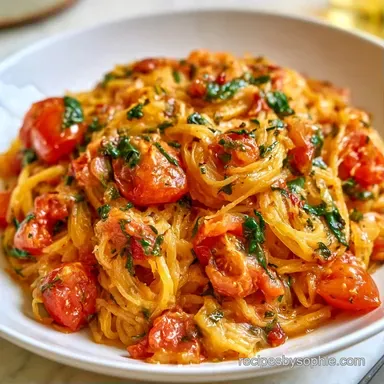
Mediterranean Spaghetti Squash with Tomatoes and Spinach
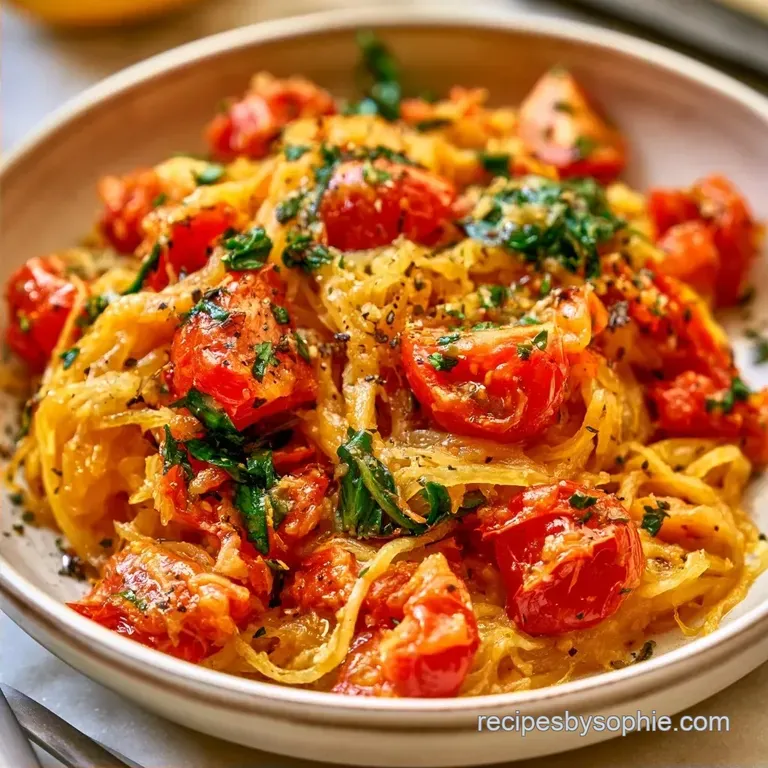
- Time: 10 min active + 60 min cooking
- Flavor/Texture Hook: Salty feta and blistered, popping cherry tomatoes
- Perfect for: A light weeknight dinner or healthy meal prep
Easy Mediterranean Spaghetti Squash
On rainy October evenings, my kitchen often smells of caramelized squash and roasted garlic. Early on, I made the mistake of roasting the squash cut side up, which resulted in a watery, mushy mess. I nearly abandoned the vegetable until I discovered the trick of flipping it over.
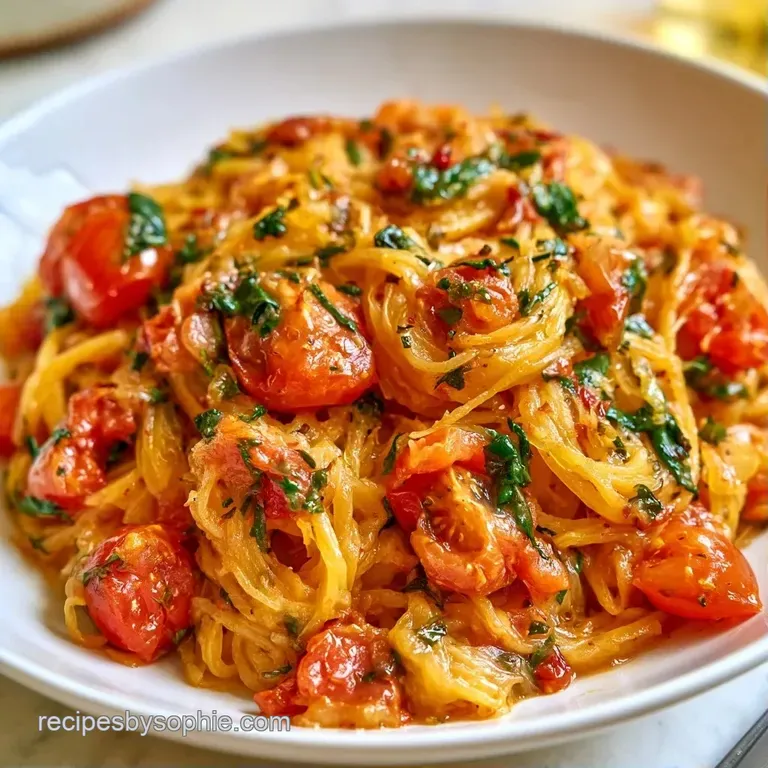
The difference is remarkable. I now adore the pop of cherry tomatoes in a hot pan and the sight of baby spinach wilting among those golden, spaghetti-like strands. It provides a satisfying, hearty meal that doesn't feel too heavy.
This Spaghetti Squash with Tomatoes and Spinach is a perfect choice for a sophisticated meal that requires very little work. The lemon adds a bright acidity, while the creamy feta balances the earthy sweetness of the roasted squash.
Quick Guide to the Dish
Right then, let's look at the basics. This recipe feeds three people and focuses on a minimal tool set. You don't need a bunch of gadgets, just a baking sheet and a skillet.
If you're looking for something more filling, you can toss in some grilled shrimp or chickpeas. But on its own, the combination of salty cheese and bright citrus makes it a complete experience. Trust me on the lemon juice, it's the one thing that ties the whole dish together.
| Goal? | Exact Change |
|---|---|
| Extra tang? | Fold in 1 tsp lemon zest |
| More heat? | Increase pepper flakes to 1/2 tsp |
| Richer taste? | Add 1 tbsp butter to the skillet |
The Reason it Works
I spent a few weekends testing different roast times and positions. Here is what actually matters for the texture.
- Face Down Roasting
- This lets steam escape and sears the flesh against the pan, which prevents the strands from becoming soggy.
- Blistering Tomatoes
- Heating the tomatoes first creates a natural sauce that coats the Spaghetti Squash without needing heavy cream.
- The Cooling Gap
- Letting the squash rest for 5 minutes allows the fibers to set, making it easier to scrape out clean strands.
Required Ingredients and Swaps
For the squash, stick to a medium one around 3 lbs. If it's too huge, the center stays hard while the edges overcook.
| Component | Purpose | Substitute Notes |
|---|---|---|
| Spaghetti Squash | Low carb base | Butternut squash works but isn't strand like |
| Feta Cheese | Salty, creamy finish | Goat cheese provides a similar tang |
| Baby Spinach | Freshness and color | Kale works but needs 3 more mins to soften |
| Cherry Tomatoes | Acid and sweetness | Sun dried tomatoes add a more concentrated flavor |
For the Roasted Squash
- 1 medium (approx. 3 lb / 1.36 kg) Spaghetti SquashWhy this? Holds its shape better than smaller varieties
- 2 tbsp (30ml) extra virgin olive oil (Substitute: Avocado oil)
- ½ tsp (3g) kosher salt (Substitute: Sea salt)
- ¼ tsp (1g) cracked black pepper (Substitute: White pepper)
For the Mediterranean Sauce
- 1 tbsp (15ml) extra virgin olive oil (Substitute: Butter)
- 3 cloves (15g) garlic, minced (Substitute: 1 tsp garlic powder)
- 1 cup (150g) cherry tomatoes, halvedWhy this? They burst quickly for a fresh sauce
- 3 cups (90g) fresh baby spinach (Substitute: Swiss chard)
- ¼ cup (30g) feta cheese, crumbledWhy this? Adds the necessary salty punch
- 1 tbsp (15ml) fresh lemon juice (Substitute: Apple cider vinegar)
- ¼ tsp (1g) red pepper flakes (Substitute: Pinch of cayenne)
Simple Tools for the Job
I keep this recipe minimal because who wants to wash ten pans? All you need is a sharp knife for the squash and a fork for the scraping.
A large rimmed baking sheet is best so the oil doesn't drip onto the oven floor. For the sauce, a wide stainless steel or cast iron skillet works best because it distributes heat evenly, ensuring the tomatoes blister quickly.
Chef's Note: If you have a mandoline, don't bother using it here. The fork method is the only way to get those authentic "noodles."
Steps to Cook the Dish
Adhere to these steps to maintain a crisp texture and bright flavors.
- Set your oven to 400°F (200°C).
- Cut the Spaghetti Squash in half from top to bottom and clear out the seeds.
- Coat the inner flesh with 2 tbsp (30ml) olive oil, salt, and pepper.
- Place the squash cut side down on a baking tray and roast for 35–45 minutes until a fork slides into the skin and flesh with zero resistance.
- Let the squash rest for 5 minutes, then pull the flesh into long strands with a fork.
- Warm 1 tbsp (15ml) olive oil in a wide pan over medium-high heat; sauté cherry tomatoes for 2–3 minutes until skins blister and pop.
- Turn the heat down to medium and stir in the red pepper flakes and minced garlic for 60 seconds until the garlic smells fragrant.
- Mix in the baby spinach for 1–2 minutes until the leaves just wilt.
- Move the roasted Spaghetti Squash strands into the pan and fold them in gently using tongs.
- Take the pan off the heat and stir in the lemon juice and crumbled feta; add a final seasoning of salt and pepper before plating.
Fixing Common Issues
Even with a simple recipe, things can go sideways. Most of the time, it's a temperature or timing issue. If you find the texture isn't right, you might want to try a different approach like my spaghetti squash lasagna which uses a different layering technique to manage moisture.
Sogginess Problems
This usually happens if the squash is overcooked or if you didn't let it rest. If your strands feel too wet, spread them on a paper towel-lined tray for 2 minutes before adding them to the skillet.
Burnt Garlic
Garlic burns in seconds at high heat. Always lower the temperature before adding the minced cloves, and only cook them until they smell good, not until they turn brown.
Tough Strands
If the strands don't pull away easily, the squash isn't done. Put it back in the oven for 5-10 minutes. According to USDA guidance, while the squash is a vegetable, ensuring it is cooked through makes it digestible and soft.
| Problem | Fix |
|---|---|
| Watery strands | Roast face down and let rest 5 mins |
| Bitter spinach | Stir in only at the very end of cooking |
| Bland flavor | Add an extra squeeze of fresh lemon |
Storage and Waste Tips
Store the completed Squash with Tomatoes and Spinach in a sealed container in the refrigerator for 3 days. To warm it up, use a skillet over medium heat for 3-5 minutes. Steer clear of the microwave, as it often turns the squash mushy.
For freezing, I suggest storing the roasted strands alone. Keep them in a freezer-safe bag for 3 months. Before serving, let them thaw in the refrigerator overnight and then stir them into a fresh batch of spinach and tomatoes.
Don't throw away the squash skins. Although we don't eat them, they're perfect for making vegetable stock if you have other scraps like carrot ends and onion peels. Simply simmer them with salt and water for one hour.
Different Ways to Serve
Once you've tried the Mediterranean version, you can play with the flavors. I often swap the feta for parmesan and add a splash of heavy cream for a more indulgent meal. If you're craving meat, this pairs well with a side of grilled chicken or you can try a Spaghetti Squash with Sausage recipe for a heavier dinner.
For a vegan version, swap the feta for toasted pine nuts or a dollop of hummus. The creaminess comes from the nuts, and the saltiness is still there.
If you have leftover Tomatoes and Spinach from another meal, you can just toss them in with the roasted strands. This is one of those healthy Spaghetti Squash recipes that actually tastes like a treat.
The Best Side Pairings
Since this dish is light and acidic, you want sides that add a bit of crunch or protein. A piece of toasted sourdough rubbed with a raw garlic clove is the classic choice here.
Another great option is a simple side salad with a lemon vinaigrette. The acidity in the salad mirrors the lemon in the squash. For those who need more protein, a piece of seared salmon or some roasted chickpeas adds a nice textural contrast to the soft strands.
This Squash with Tomatoes and Spinach also works as a side dish for a roast chicken dinner. The brightness of the Mediterranean flavors cuts through the richness of the meat. Just be sure to serve it immediately so the spinach stays vibrant green and doesn't turn brown.
Right then, you're all set. Just remember to roast that Spaghetti Squash face down and you'll have a meal that actually satisfies the pasta craving without the carb heavy lift. Let's get cooking!
Recipe FAQs
Do spinach and squash go together?
They pair excellently because the earthy spinach balances the mild sweetness of the squash. Using lemon juice and feta adds the necessary acidity to tie them together.
Is it true that spaghetti squash is just a tasteless substitute for pasta?
That's a myth. When roasted at 400°F and seasoned with garlic and red pepper flakes, it develops a rich, savory profile.
How to make soft spaghetti squash?
Roast the squash cut-side down for 35–45 minutes. Ensure a fork slides into the skin and flesh with zero resistance before removing it from the oven.
What is the best way to roast the squash?
Slice the squash in half and scoop out the seeds first. Rub the flesh with olive oil, salt, and pepper before roasting at 400°F.
Which ingredients make it taste better?
Adding crumbled feta and fresh lemon juice provides a salty, zesty contrast to the vegetable. Sautéing cherry tomatoes and garlic in olive oil also creates a flavorful base.
Why does my stomach hurt after eating spaghetti squash?
This usually happens because the squash is high in fiber, which can cause bloating if your body isn't used to it. Drinking more water can help your system process the fiber more easily.
Can you suggest sides for dinner?
This meal works well with grilled proteins or a side of crusty bread. If you're looking for other pasta-style alternatives, you might enjoy our garlic pasta.
Roasted Spaghetti Squash with Tomatoes